Insecticide-treated nets
Pyrethroid-only, PBO, chlorfenapyr, pyriproxyfen, dual active ingredient nets, efficacy and wash durability
 VCPECInstitut Pierre Richet
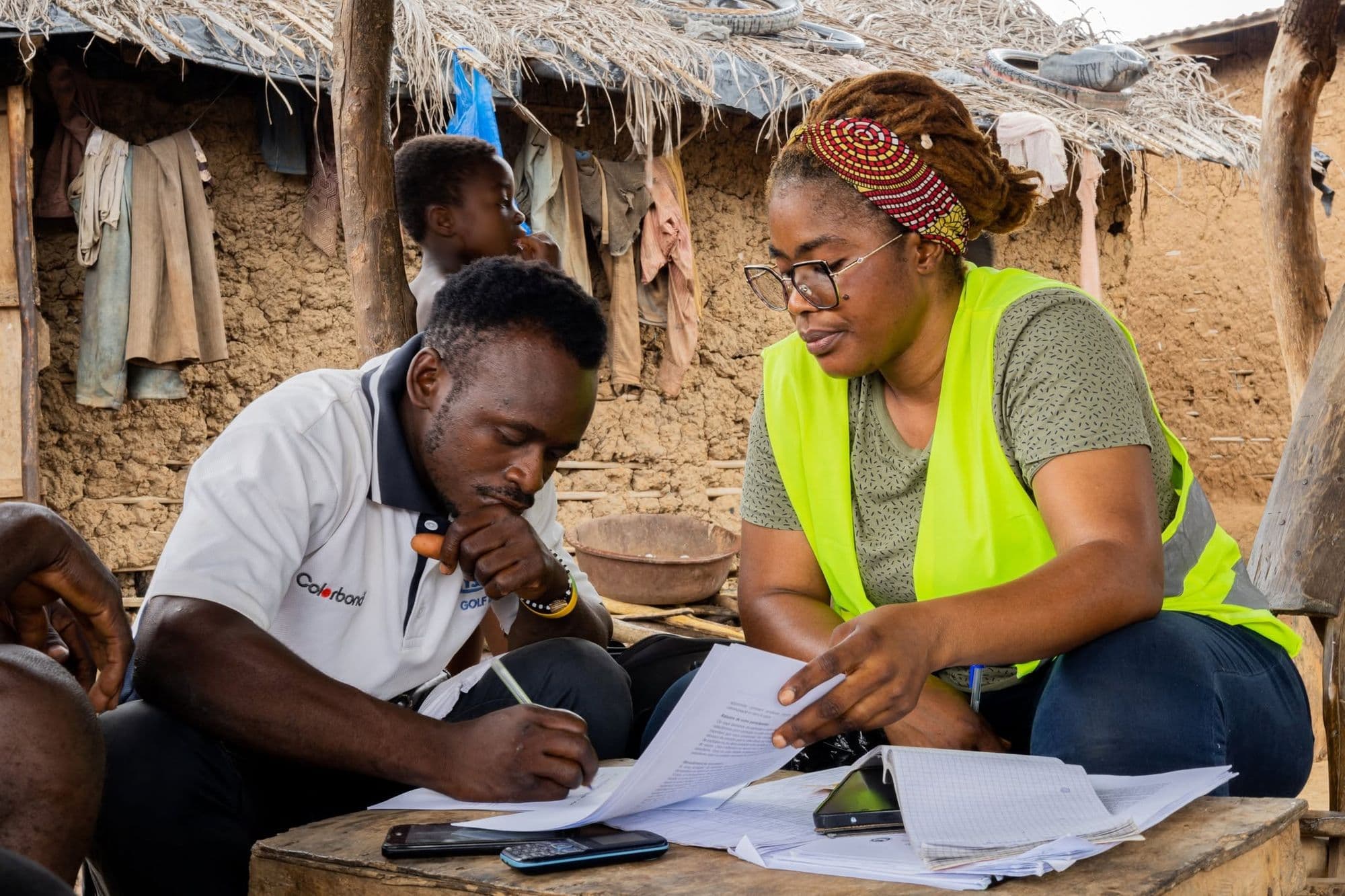
From cone tests to randomised trials across whole villages, five types of study to prove a product works.
Pyrethroid-only, PBO, chlorfenapyr, pyriproxyfen, dual active ingredient nets, efficacy and wash durability
Residual formulations, including clothianidin and broflanilide, duration of action on local walls, combinations with nets
Attraction, feeding and mortality, in huts and semi-field systems
EaveTubes, window screening, lethal house lures
Breeding sites and dry-season strategies alongside nets
Insecticide-treated materials, including military uniforms, and their effect on mosquitoes
Efficacy of repellents applied to the skin
Hut trials follow the mosquito peaks, in the long then the short rainy season. Laboratory and semi-field tests run all year round thanks to the insectary colonies.
The centre runs phase I and II evaluations under GLP, and phase III community trials. Chemical analysis of products can be subcontracted, with your agreement, to accredited laboratories, while the centre remains responsible for the study and the report.
WHO cone and tunnel tests, tube and bottle tests, knock-down, mortality, wash resistance, bioassays suited to the product.
Experimental huts, semi-field systems, efficacy on treated surfaces and entomological parameters under the relevant protocols.
Efficacy under conditions of use, operational performance, acceptability, durability and longitudinal follow-up depending on the product type.
Indicative landmarks. The phase I to III labels do not replace current WHO prequalification requirements.
The reference documents for evaluating a product, in the laboratory, in semi-field systems and in the field. Each link opens the official WHO source.
Insecticide-treated nets, from the laboratory to community studies, with its implementation guidance
2023Current
Former WHOPES guide for nets, laboratory, semi-field and field studies
2013Historical
Indoor residual spraying
2006Historical
2005Historical
Spatial repellents
2013Historical
Skin-applied repellents
2009Historical
Space spraying
2009Historical
Coils, emanators, vaporizers and aerosols
2009Historical
Molluscicides, schistosomiasis control
2019Current
Aircraft disinfection
2012Current
2024Current
2024Current
2023Current
Experimental huts
2023Current
Semi-field studies
2026Current
Durability and efficacy of nets over three years of routine use
2026Current
Tests, monitoring and interpretation of resistance
2022Current
2022Current
Bottle bioassays
2022Current
Filter paper impregnation
2022Current
WHO recommendations on malaria interventions
2026Current
"Historical" marks an older edition, which WHO still lists for most of these product families. Current prequalification requirements depend on the product type and its claims, and a novel product may require deviations from these guidelines. These links are documentary references and do not amount to approval of a study protocol.
You describe the product, its active ingredient and the target stage. A kick-off meeting sets objectives, deliverables, timeline and contacts.
A study plan in line with WHO guidelines, approved by the centre and by you before work starts.
A study director runs it under quality assurance oversight. You are kept informed at every stage, deviations included.
Results, statistics, deviations and quality assurance statement, reviewed by the study director, quality assurance and management.
Data ready for WHO prequalification and regulators. The efficacy module of the dossier brings together laboratory, semi-field and field studies.
Commissioned studies are run under a confidentiality agreement.